
Introduction
When we talk about Family Constellation Therapy, many people immediately associate it with Bert Hellinger, who systematized and disseminated the method worldwide. However, few know that the foundations of this therapeutic approach are deeply connected to the field of Systemic Family Therapy, particularly to the studies of Murray Bowen and the systemic perspective that emerged in the mid-20th century.
In this article, we will explore the theoretical background of systemic therapy, its connection with Bowen’s work, and how these ideas influenced the development of Family Constellations. We will also highlight the historical contributions of General Systems Theory, Cybernetics, and the sciences of human relationships.
In every family story, invisible patterns shape the way we love, connect, and sometimes distance ourselves. Understanding these dynamics is the first step toward healing what has been unconsciously repeated for generations.

The Historical Roots of Systemic Family Therapy
The starting point of systemic therapy dates back to the post-war period in the 1950s, when the massive European migratory movement raised new challenges for families. Therapists began to observe that individual suffering could not be understood in isolation, but rather as part of a broader relational and interdependent system (VOGEL, 2011).
This was the context in which systemic thinking gained strength, supported by the principles of General Systems Theory, developed by Ludwig von Bertalanffy (1937, 1950). His contributions highlighted the concepts of General Systems Theory , offering deep insights into the patterns and dynamics that shape family and organizational systems. For readers who want to explore these ideas in depth, this book is an invaluable resource for understanding the foundations of systemic thinking. His contributions highlighted the concepts of:
- Totality: the interdependence and interaction among all members of a system.
- Structure: the relational framework that organizes the system.
- Equifinality or Homeostasis: the tendency of a system to seek balance, even when following different paths.
These ideas provided a scientific basis for understanding families not as isolated individuals, but as living, dynamic systems, constantly in motion.
Cybernetics and the Concept of Feedback

Another crucial influence was Cybernetics. The term, from the Greek kibernetes (steersman), refers to mechanisms of control and communication within a system. In the 1950s, Ross Ashby (1956) introduced the concept of feedback, or retroalimentação, highlighting how information circulates and reorganizes systems to maintain balance.
In family therapy, this perspective explains how repetitive communication patterns and feedback loops keep families in cycles of conflict, silence, or adaptation. Recognizing these loops became essential for therapeutic interventions.
Bowen’s Systemic Family Therapy
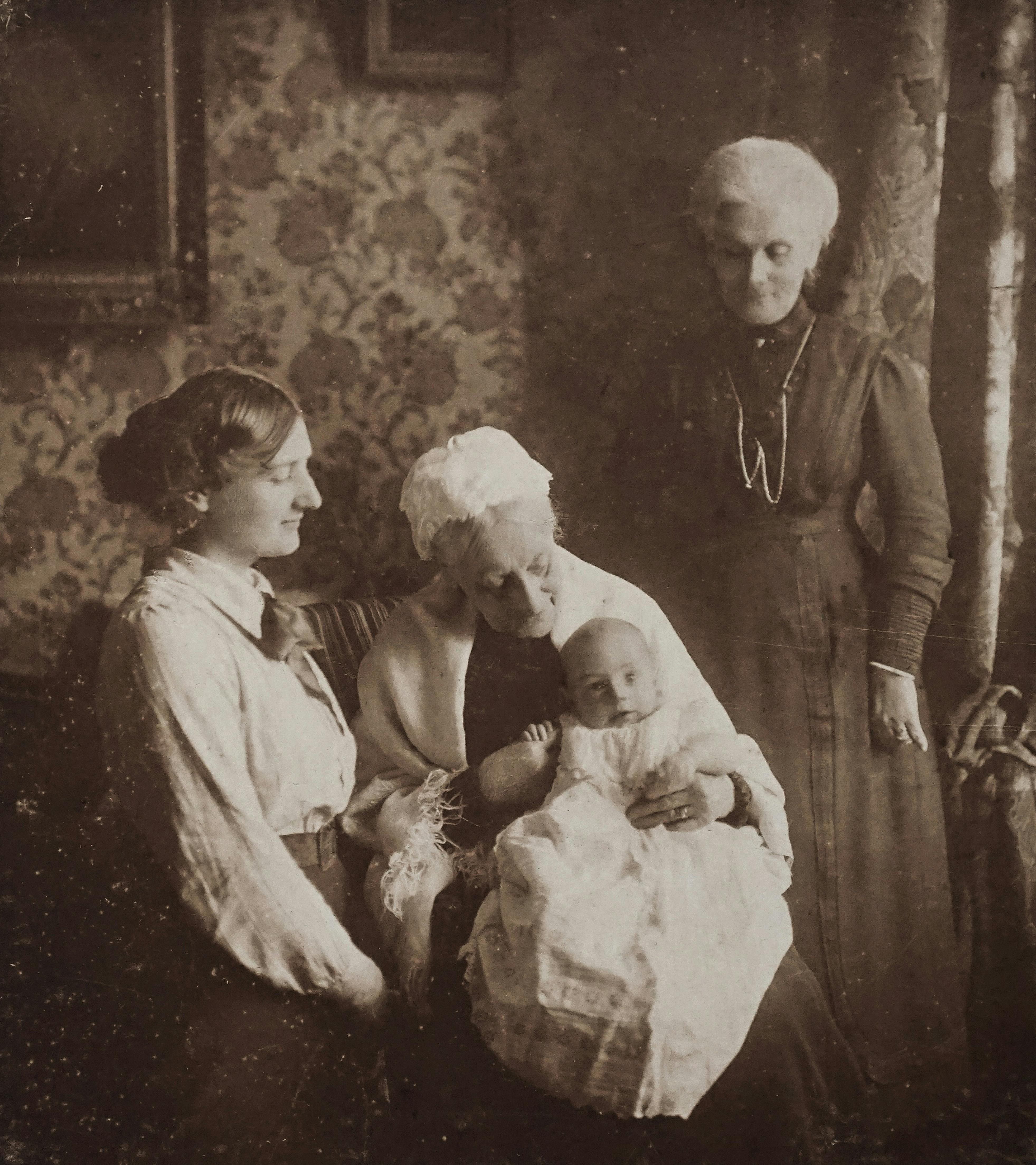
Murray Bowen, one of the pioneers of systemic therapy, developed what became known as Bowen Theory or Bowen Family Systems Theory. His approach emphasized multigenerationality — the idea that family dynamics and emotional processes are transmitted across several generations.
Some of his key concepts include:
- Differentiation of Self: the ability to maintain one’s individuality while staying emotionally connected to the family.
- Triangles: when two people in conflict involve a third member to relieve tension.
- Family Projection Process: how parents transmit their emotional difficulties to their children.
- Multigenerational Transmission Process: patterns that repeat through generations.
These concepts echo strongly in Family Constellation Therapy, which also emphasizes transgenerational loyalty, invisible bonds, and the repetition of unresolved family dynamics.
For a deeper dive into this, read our article on “How Generational Patterns Shape Our Present Relationships”
From Systemic Family Therapy to Family Constellations
The development of Family Constellation Therapy draws on these theoretical roots. Known in German as Familienaufstellungen (“placing the family in position”), this method is phenomenological and systemic (Hellinger, 2001-2002).
Like Bowen’s therapy, Constellations also recognize:
- The multigenerational perspective: past traumas influence present dynamics.
- Systemic loyalty: hidden bonds of love that tie descendants to the fate of their ancestors.
- The importance of inclusion: what is excluded or silenced in one generation often returns in another.
Hellinger compared the method to family sculptures and psychodrama, as it involves physically positioning representatives of family members or symbolic elements in space, allowing invisible dynamics to become visible (Graça, 2015).
Through this representation, clients can access deeper layers of understanding and initiate a process of reconciliation and healing.

Systemic Science and Human Relationships
As Graça (2015) points out, Family Constellations are also supported by the broader field of the science of human relationships. These include the study of emotional bonds, systemic loyalties, and the psychological dynamics that hold families together.
What distinguishes Family Constellations, however, is its brief and focused approach, creating space for immediate phenomenological insights that often generate profound emotional and relational shifts.
If you’re interested in this dimension, don’t miss our article on “The Role of Loyalty in Family Systems”
Conclusion
Family Constellation Therapy, while popularized by Bert Hellinger, is deeply rooted in the history of Systemic Family Therapy, especially the contributions of Murray Bowen and the systemic sciences of the mid-20th century.
By drawing on General Systems Theory, Cybernetics, and multigenerational perspectives, Family Constellations offer a powerful, brief, and symbolic way of bringing hidden family dynamics to light.
Understanding this historical and theoretical foundation helps us see that healing is not just about the individual. It is about recognizing and integrating the stories, loyalties, and emotions that weave through generations.
Final edition currently available for purchase
👉 📖 Support Our Website!
Subscribe to our newsletter for updates on Family Constellations and systemic therapy. Click our recommended books and links, and leave a comment 💬 to share your thoughts. Every action helps us keep providing valuable content!
